
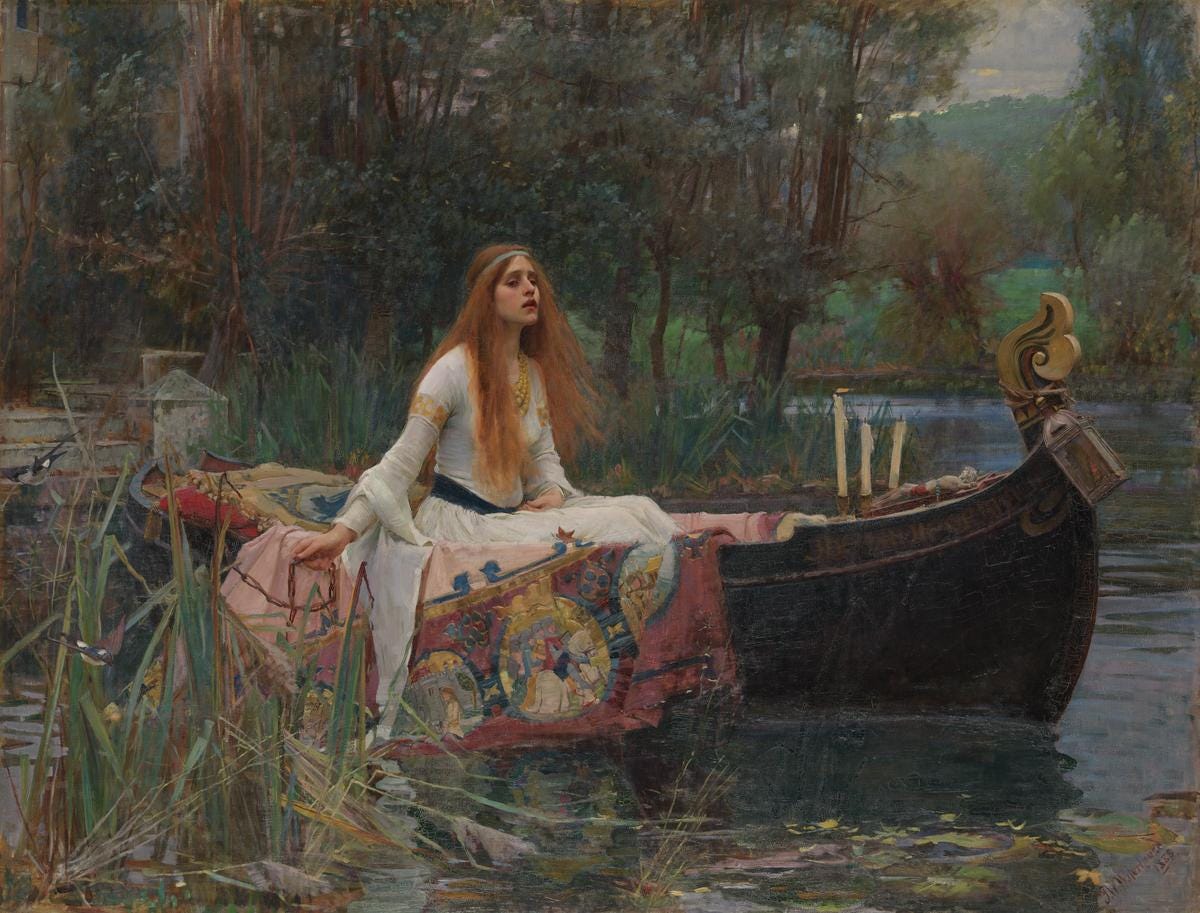
At the tail end of a spate of Gothic-inspired films comes“Wuthering Heights” by the tony British socialite Emerald Fennell and Charli XCX (the real star of the film). This follows Poor Things, Nosferatu, Dracula by Luc Besson, and Guillermo Del Toro’s Frankenstein. They are all heavy on scientific horror, shadowy lighting, religious psychosis, modernity blooming out of decay, doomed romance, sexual exploitation, and orgasmic ecstasy that will invariably condemn you to suffering. None of them are very good. With the exception of Nosferatu, they are all pastiches on the Gothic, taking from its tropes and formulas without much respect for the underlying meaning.
“Wuthering Heights”, the film by Emerald Fennell, is not particularly Gothic. There are no ghosts in it, no real violence, no damnation, no terror. The ruined house is too scenic to inspire horror. The most famous scene from the novel, immortalized by Kate Bush, in which a ghost child scratches on the window begging to be let in from the cold, does not appear in the new film at all. In fact, almost nothing that happens in Emily Brontë’s novel makes it into the film. I was briefly disturbed by the joyless experience of watching the movie. But the more I thought about it, the more it came to seem like fanfiction. Fanfiction typically doesn’t imitate the original; instead, it provides something totally different, a fever dream that satisfies the captivating experience of reading.
Clearly, Emerald Fennell and I had different experiences of reading Wuthering Heights. I loved the book when I first read it. It is the first classic novel I remember loving like that. I could close my eyes and imagine the Yorkshire moors, buried deep in mountains of snow, or roughly blooming, old manors spread out across the countryside like mushroom patches, a world so totally different from my California childhood. Wuthering Heights was my introduction to the Gothic. It contained seeds of fairy tales, which I had always loved, but this was a grown-up version. As a teenager, I wrote my own Gothic pastiche, shamelessly copying the formulas of 19th century novels. Even after I outgrew the Gothic, it maintained its grip over me. I still find that thrill sometimes in horror, in romance, in stories about haunting, about decay, about the ruins of a vanished world.
I did not experience the same excitement when I watched Emerald Fennell’s adaptation, but I did find it morbidly fascinating. It is almost totally emptied of plot and of landscape and of context. Almost all the relationships are different. Instead of a twisty multi-generational story about inheritance, property, incest, and the lingering remnants of quasi-feudalism in rural England, Fennell serves a kind of rags to riches Cinderella story. Cathy, played by Margot Robbie as a sweet blonde, escapes her traumatic, poor childhood by marrying a rich man who is kind but whom she does not love. She wanders around his palatial mansion draped in gauze and velvet, like a discount version of Coppola’s Marie Antoinette (she even wears a tiara in one scene). What she really yearns for though is to be picked up and thrown around by Heathcliff, played by Jacob Elordi in an inexplicable accent.
All of the women in “Wuthering Heights” yearn to be sexually submissive. The housekeeper at the old manor lets another servant put a bit in her mouth while he has sex with her from behind. Later on, Heathcliff breaks into Isabella’s room and undresses her while humiliating her in an explicitly consensual way. She loves this. Later on, she gets on all fours and barks like a dog as a part of their kinky roleplay (one of the few moments of levity in the film).
It is unsurprising that Emerald Fennell would not portray Heathcliff physically and emotionally abusing Isabella because she is so committed to his fundamental sexy romanticism. It is a startling artistic choice, though. Rather than fearing Heathcliff as a Byronic hero – moody, sexually appealing, self-destructive – who will ruin their lives, the women of “Wuthering Heights” fear their own desire to be degraded a little bit by a very tall man. I was reminded of Ayesha Siddiqi’s probing review of A Promising Young Woman, ostensibly a gory revenge fantasy against violent misogyny, but in practice “modern precedent appropriated, rinsed of its power to name abuse, and grafted onto a conservative ideology confidently being pushed onto the future.” In this sense, “Wuthering Heights” resembles nothing so much as one of those vertical shorts that are so popular online and are almost always about a young (often virginal) woman who ends up improbably subservient to a wealthy and attractive man with a personality disorder.
Of all the recent Gothic films, Nosferatu is the most interested in the sexual mores of the Gothic. Ellen (Lily Rose Depp) is so desperate to escape the extreme repression of her life that she ends up contacting a malevolent vampire. Possessed by this psychic demon, she shakes in something between a seizure and an orgasm. She is groomed, haunted, terrified, hunted down, but she is also trapped in the confines of a life without any spiritual or physical outlet. This is mirrored in the larger world in which she lives, where the occult uneasily rubs up against a new rational scientific world. The vampire still inhabits a feudal hangover, ruling over terrified villagers. Ellen and her husband are ruled by the market and the cold value of money.
The contemporary appeal of the Gothic is clear. We also live in a world rife with terror and superstition and mistrust of scientific logic. The American empire is decaying. A huge mass of the population is left dispossessed as the labor that provided their sustenance is made obsolete. The extreme violence, racism, exploitation, inequality, and abuses of power that form the bedrock of our social system are left bare and exposed, not even dressed up in the niceties of liberal democracy anymore. What is more curious than a fascination for the Gothic is how staid it all is. Our Gothic is largely confined to the limits of the distant past. It is depoliticized and sanitized, rendered palatable to a fan edit. Perhaps every generation gets the Gothic they deserve and perhaps, in that case, this is the best we can really hope for.

A young girl experiences classic symptoms of a nervous disorder. Her twin brother believes that her body will be exhumed when she dies and dissected or experimented upon for science. To prevent this, he buries her alive in the walls of his family’s crumbling estate. One night, he and his friend hear ghostlike noises. The sister is breaking out of her tomb and attacks her brother, who dies on the spot. The house collapses into pieces around them.
Both siblings are solitary, reclusive, and bound to their inheritance, which will inevitably drag them down into their tragic ending. Catalepsy, from which the sister, Madeline, suffers, also reportedly afflicted the 16th century Spanish saint, Teresa of Avila. The nun fell into a coma for three days and only woke up when her convent was preparing to bury her. She believed it was a divine miracle, God intervening at the moment of death to revive her. Madeline has no such faith to fall back upon. She lives in a modern, godless world, where even dissociation and death will not preserve her from the relentless march of history. This is the world of Frankenstein and Dracula, of scientific experimentation gone haywire and of old social orders upended. The ancient, neglected mansion, the House of Usher, must collapse at the end of Edgar Allen Poe’s story, not only because the bloodline that thrived in it has ended, but also because it cannot survive the collision of metaphysical and materialist worlds.
Modernity haunts the Victorian novel. The new, bright, technologically advanced world, full of steam engines, cholera, dusky factories, and imperial expansion with its attendant obsession about racial purity, intrudes upon the countryside, disturbing the ghosts of the past. In Silas Marner, George Eliot’s 1861 novel, the eponymous weaver leaves the large industrial city where he has spent his whole life, after being driven out of his religious community, and goes to live in a small village called Raveloe. Like a fairytale character, he lives in a small hut and works sixteen-hour days for sixteen years, without rest or creature comforts, trying to rebuild his life. The people in the village mistrust his customs and are put off by his wraith-like appearance, stooped and pale from constant labor. His life only transforms, again like a fairytale character, when he discovers an abandoned baby and adopts her as his own child.
At the end of the story, Silas Marner and his daughter, now grown up, travel back up north and visit the church where he grew up. The entire place has changed so much that he barely recognizes it. Susan Stewart, describing this scene in her essay “Genres of Work: The Folktale and ‘Silas Marner’” (New Literary History, vol. 34, no. 3, 2003), writes that, “The factory has devoured the entire space – even the graveyard has been destroyed; the dead and the sacred are grist, too, for the mills of industrialism.” Work is the only constant in Silas Marner. The rural people of Raveloe retreat into superstition, artisanal labor, and a deep-rooted fear of strangers. “Tradition and industrialism,” writes Stewart, offer “parallel treadmills” in the story. The weaver will not become reenchanted with the natural world when he leaves the city. How could he, working those sixteen-hour days to save up a little money? Only human connection can restore his dignity to him.
Although Silas Marner was written in the 1860s, it is set earlier, on the cusp of the 19th century. It reflects the anxieties of a rapidly transforming world, one in which wages are devalued, and rents sharply rising, thanks to a series of new land enclosure policies enacted over the course of several centuries. Charlotte Brontë would also write about this landscape, in her 1849 novel Shirley, which depicts the Luddite textile worker riots in Yorkshire between 1811 and 1812. Capitalism, Terry Eagleton points out in Myths of Power, his book about the Brontës, “denies the aristocratic, Romantic-conservative values” to which Charlotte is implicitly sympathetic. She attempts to thread a needle between a defense of tradition and a rejection of the kind of cold mercantilism that threatens the fabric of English social relations.
It is unsurprising that the Gothic flourished in England, a country that maintained its ruthless aristocratic hierarchy, even as it rapidly modernized. Over the course of the 19th century, industrial London exponentially expanded to become the world’s largest city, driven by urban migration, population growth, and industrialization. The working poor lived in such cramped quarters and under such abominable conditions that cholera quickly became endemic and devastating, killing thousands in a matter of days. Charles Dickens famously describes a city rife with crime, tuberculosis, starvation, pollution, forced prostitution, and child abuse. In the countryside, laborers put out of work by automation or driven off of grazing land might at least have the choice to starve less publicly and with slightly more dignity. Alongside them, the rural aristocracy were threatened and supplanted by new and relentless market forces that did not particularly care about their heritage.
Gothic novels juxtapose older, conservative values of king, country, and religion, with new and unsettling beliefs in science, progress, social equality, and atheism. In the tension of this clash and all its paradoxes, the Gothic projects a moody, tragic vision of the world, one in which all paths forward are doomed and dangerous. The Gothic seduces because it looks backwards toward a vanishing world that has already been swept away by the march of history.
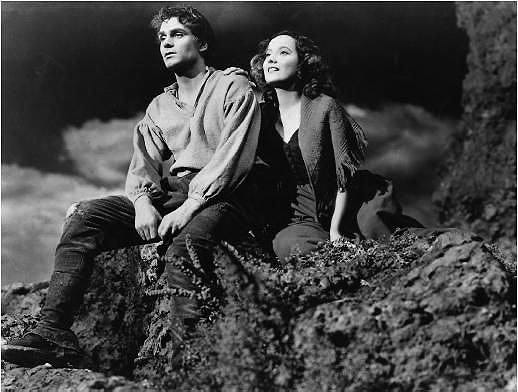
In Jane Eyre, a young woman goes to live in a ruined mansion where a Byronic hero sulks and broods. His mad wife is hidden upstairs in the attic, but he tries to marry our heroine anyway. This transgression, according to narrative law, would end our heroine’s life, so she refuses to marry him until his wife dies and she can do so with a clear conscience. The wife comes from the British Caribbean and appears dark and spectral, in contrast to our heroine, who is pure and steadfast, but nonetheless tempted by the joys of extramarital romance.
In “The Mask of the Red Death,” a prince locks himself in a walled abbey with all his courtiers to escape a terrible plague. Outside the gates of the abbey, sealed shut, the land is ravaged by death and misery. Inside, the prince decides to hold a masquerade ball. One mysterious guest appears dressed up like a plague victim. But when the others tear off his mask, there is nothing underneath. He is the plague itself and they are all about to die.
Poe’s story is about the inevitability of mortality, but it is also about fear: the terror of uncleanliness and the indifferent masses of the world right outside your door, the terror that you too could one day be like them. Jane Eyre does not fear becoming like Bertha (i.e. mad) because she is of levelheaded English descent. But she does fear becoming like Bertha in the sense that Bertha is sexually charged, wanton, fallen. She fears contamination from a sensual and mystical world that she can only glimpse; the colony, with its shamanic magic and sexual permissiveness and racial mixing.
Gayatri Spivak reads the novel along similar lines. In her landmark essay “Three Women’s Texts and a Critique of Imperialism,” she claims that for Brontë, Bertha represents the limits of humanity and is written as such to reaffirm Jane’s own personhood, despite the fact that she is little, plain, poor etc. Class conflict, in Spivak’s intervention, can be subsumed precisely because of the specter of the racialized other. Jean Rhys, in her novel Wide Sargasso Sea, retells the story from the mad wife’s perspective, sympathetically reinterpreting her. It is commonplace to read this analysis of Jane Eyre as a critique of Charlotte Brontë. But it is perhaps less a moral or identitarian criticism and more a way of contextualizing Victorian literature. 19th century English novels are full of anxiety about class, about empire, about modernity, about decay. Stripped of this tension and conflict and murky morality, Jane Eyre is just a story about a woman who falls in love with her hot boss, who happens, in turn, to be unhappily married.
Wuthering Heights, too, is about class and wealth and inheritance and race. The contemporaneous action of the novel is mostly around a battle over a suppressed will and Heathcliff’s expropriation of both families’ land and money. The novel’s schema of nature vs. civilization, juxtaposed in the refined Lintons vs. the rough and wild Earnshaws, in Lockwood, the dandyish southerner, vs. the hostile and misanthropic people of Yorkshire, and in the moor, which encroaches upon the houses and also upon the wild corner of the churchyard where Catherine asks to be buried, thus also determines its social relationships. “Whereas in Charlotte [Brontë]’s novels, the love-relationship takes you into society,” writes Eagleton, “in Wuthering Heights, it drives you out of it.” This is, I think, the reason for the enduring popular appeal of the story, why it is considered a great romance, but also one of the hardest aspects to fully grasp for a contemporary reader. It is in some ways the cornerstone of the Gothic and of Byronic Romanticism, drawing on the subversive Medieval ideals of courtly love, which are in their essence incompatible with marriage, reproduction, or even, often, consommation.
But it is so difficult now, in our world saturated by ideas of romantic love, to convey these twinning visions of love relationships, one as socially productive and one as socially disruptive. One kind, the marriage kind, disciplines the couple into a socially productive unit. Romantic love, or its precursor, wrecks the fabric of social relations by prioritizing the individual over their family or society. Translating the concept of romance as a destructive force into contemporary terms is usually done through other forms of transgression. This is what Fennell does in her “Wuthering Heights” adaptation. Cathy has to marry for money, but she starts a passionate extramarital affair. Power, in the film, is stripped of its complex trappings of class (new money vs. old money), gendered inequality (inheritance automatically bypassing women), and race (about which much has been written and I have not much to add), and reduced to a series of oversexed BDSM dynamics. Cathy accuses Heathcliff of degrading her twice, once after he catches her masturbating and again after they have sex in her husband’s home at night. The servant who was sexing up the housekeeper in frisky, horse-inspired play remarks after she has gotten married and left the house that it would lower her now to acknowledge him. Finally, Heathcliff gestures to Isabella kneeling on the ground, chained up like a dog, and gloats that he has successfully brought her down to his own level.
Stripped of Victorian understandings of class, respectability, and patriarchal domination, power in the historical romance canon that inspired Fennell’s adaptation is nothing more than roleplay. The appeal of the genre is dresses, corseting, carriages, the delayed gratification of heaving bosoms and yearning glances. The unfortunate part of all of this is that we live in a world overshadowed by many of the same concerns that animate the Gothic. AI threatens to both eliminate human labor and, more existentially, the human soul (Dorian Grey style). Inheritance and real estate assets are the primary drivers of wealth for younger, disenfranchised generations. Sexual or gendered violence and exploitation are so central to the genre that they form the basis of Jane Austen’s famous parody in Northanger Abbey, where a young woman who is an avid reader of Gothic novels becomes convinced that the father of her suitor has murdered or imprisoned his dead wife. It is possible to imagine a Gothic that renders these concerns contemporary, urgent, and terrifying, that cleverly draws out parallels between past and present, or even shows the unbroken lineage from the dawn of the industrial revolution to its current decline. Our world has changed both more and less than we might think.
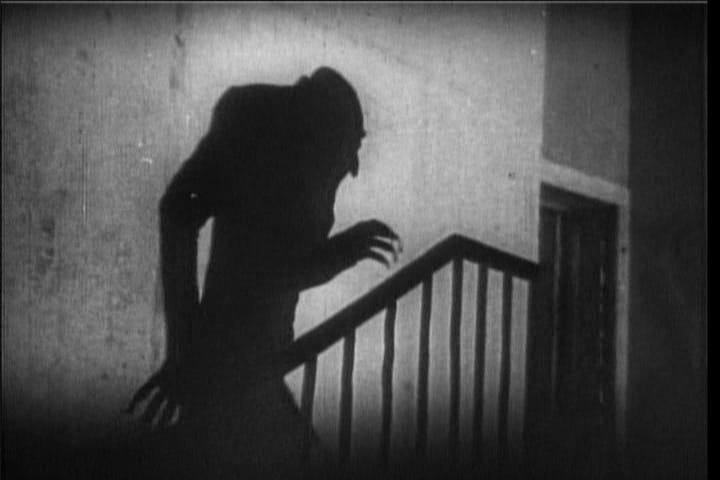
Dinner at Jeffrey Epstein’s house, writes Woody Allen, in a letter on the occasion of Epstein’s 63rd birthday in 2016, is often served “by several young women remding [sic] one of Castle Dracula where Lugosi has three young female vampires who service the place. Add to this that Jeffrey lives in a vast house alone, one can picture him sleeping in damp earth.”
Allen, himself, who groomed and married his step-daughter, in many ways resembles a Gothic father. Incest, or its suggestion, is everywhere in Gothic novels. Jenny DiPlacidi, in her study of Gothic incest, Gothic Incest: Gender, Sexuality and Transgression writes, that “In recognising these representations of father-daughter incest as aligned with the sociological model of incest as abuses of power encoded within the family and social structures, incest is revealed as a consequence of these structures of power.” Incest is both transgressive and non-transgressive, in other words. It both destabilizes and reaffirms traditional modes of patriarchal domination and control of women.
It is difficult to grasp the sheer scale of Epstein’s abuses, the reach of his influence, and the lawless impunity with which he operated. The fact that he has exerted such a long shadow beyond the grave and that some mystical version of his story seems to have entered conspiracy theory in the form of QAnon before it actually entered public consciousness all make him feel like a monstrous creature of mythology. It is hard to imagine that he lived on 71st Street and was friendly with many people you have heard of or perhaps have met. He is part Dracula, vampirically preying on young girls, and part Bluebeard, with rooms of his huge mansion devoted to creepy art, massage tables, and other sexual abuse rituals. In interviews with Maria Farmer, an art student who was recruited to Epstein’s service by Eileen Guggenheim, then-dean of the New York Academy of Art, she describes being locked inside Les Wexner’s Ohio estate, where she was relentlessly spied upon via CCTV, prevented from leaving the property, and starved in order to reduce her body to the willowy girlish proportions that Epstein liked. All of this, according to Farmer, was a tactic to force her to groom her then-16-year-old sister into Epstein’s trafficking ring. Maria Farmer contacted the FBI in 1996 who buried her allegations.
This story has a kind of fairy-tale logic to it. It is so horrifying and so totalizing, indicting every level of our sprawling political-economic system, that it is hard to find language to speak about it. Perhaps as a result, it has proven nearly impossible for anyone to talk or write about Epstein without indulging in prurience, conspiratorial thinking, or gossip (The New York Times recently found it fitting to run a subheading reading: “The disgraced financier’s recently released documents are steeped in a clubby world that is all but gone.”)
But Epstein’s glamorous social sphere is still here, and his abuses of power, while grotesque and extreme, are not really so unfamiliar to us. DiPlacidi points to This Sex Which is Not One, in which the philosopher Luce Irigaray claims that “the law that orders our society is the exclusive valorisation of men’s needs/desires, of exchanges among men … wives, daughters, and sisters have value only in that they serve as the possibility of, and potential benefit in, relations among men. The use of and traffic in women subtend and uphold the reign of masculine hom(m)o- sexuality.” Almost no one affiliated with Epstein has bothered to explain how or why they overlooked the constant stream of young girls and women in and out of his multiple properties. It is apparent that he did not bother to conceal much. Even in a fawning 2002 Vanity Fair article (from which mentions of sexual abuse allegations were excised by Graydon Carter), the journalist notes with a wink that Epstein liked his women young and beautiful. The simplest explanation is that it did not surprise many of the wealthy older men (and women) with whom Epstein was affiliated. They may have been titillated or shocked by the scale and cruelty of the operation, but not by the idea that the modeling or massage industries were feeder pipelines for rape, sex trafficking, and pedophilia, or that a wealthy man might spend his time excessively indulging his sadistic and violent fantasies.
Our captured media is incapable or unwilling to examine this. Our political class is silent and reticent, afraid to bring down the whole house of cards. Our financiers are defiant and self-righteous about their associations with the whole mess. Victoria’s Secret and the rest of the fashion industry has quietly moved on. Without taking refuge in metaphor, film and literature offer a mirror to our world, a way to process and analyze it. Too bad our art is frictionless, our Gothic defanged, our literature navel-gazing.
This critique of a goofy sex movie makes me want to throw myself into gothic literature.
this is so damn good