Luxury for the masses

Let the record show that I have always hated Everlane. Their products feel to me like clothes you would wear to forget you have a body, perhaps even to forget that you are wearing clothes. It is not incidental that the company originated in San Francisco as a tech-adjacent, direct-to-consumer startup. Cloaked in the language of virtue and sustainability, their blunt-force efforts to remake supply chains resembles the trite emptiness of Silicon Valley’s “disruption” model. You could imagine a latter-day tech genius buying forty identical “midweight tees” and folding them side by side in his wardrobe. It would seem to be to their detriment that they’ve continued to grind out the same basics year after year, while more aggressive new competitors like Quince have undercut their market.
Everlane was recently acquired by Shein, a fast-fashion empire that reportedly produces 10,000 new pieces of clothing each day. Shein’s ever-growing business ventures now include selling lifeless slacks, dreary, greenwashed button downs, and something called the “cheeky” jean to upwardly-mobile young professionals who want to look presentable at work on a budget. It is curious that Shein, which is notorious for ripping off other brand’s designs at lightning speed to stay hyper-trendy, would seek out a basics line. Then again, COS is owned by the same parent company as H&M, and Massimo Dutti is owned by Inditex, the parent company of Zara. It’s a tactical kind of diversification, selling sustainability and reliable blandness to consumers weary of endless trends.
In this context, Miranda Priestly’s famous speech about the trickle-down effect of high fashion in the 2005 Devil Wears Prada movie feels quaint and outdated. You are less likely today to buy a bargain-bin department store version of a trend that made its debut on the runway a few seasons earlier than you are to order a knockoff version on Shein six months later. For several months now, I have been served a series of sponsored videos on Instagram that all go something like, “If you like Prada, buy this at Zara.” The photos are all of mesh dresses and complicated hemlines. The clothes do not look much like Prada—but then again, neither does much of what Prada sells anymore either. The brand suffers from much of the same market malaise as the rest of the LVMH portfolio, stickering its logo haphazardly on everything and recycling the trademark tendencies for which it has become best known. You can currently buy a “vintage-look” satin camisole on Prada’s website for $1850, or a pair of “vintage-look” satin briefs for $850. Both feature a small triangular logo stitched in white and prominently onto the back of the garment. This isn’t quiet luxury. If you are going to pay nearly $2,000 for an “Old Prada” style camisole, you might as well let the world know that it is Prada.
It’s not particularly surprising that the new Devil Wears Prada sequel has floundered in this context. The film is both overly self-conscious, hedging against the threat of criticism with self-deprecation, and overly self-referential, unwilling (or unable) to move the story, or its characters, forward in any meaningful way. Its conflict is driven by a fast-fashion greenwashing scandal that threatens to topple Runway (Vogue’s avatar), as well as a series of media layoffs delivered via mass text message. The conglomerate is here to stay, the film announces, the authority bestowed upon print media has faltered, leaving the magazine floundering for purpose. For most of its two-hour runtime, the fate of the magazine hangs in the balance between two feckless billionaire playboys (and a handful of McKinsey consultants) before a third billionaire –the benevolent ex-wife of one of the others– swoops in to save the day, restoring pride and autonomy to Runway, in addition to their editorial budget. No one would ever consider unionizing at this fictional media conglomerate; everyone is too obsessed with the glamor and perceived importance of their roles. Whether or not this is an accurate portrayal of the sorry state of the media industry, it makes for bad entertainment. The film neither commits to its critique of conglomerations and short-sighted media strategies, nor to its real implicit veneration of wealth and power.
Amid all this, the clothes are an afterthought. “Fashion writ large in The Devil Wears Prada 2 is treated like a joke,” writes Nicole Lipman for n+1. It’s hard to imagine Plum Sykes bragging that you would only wear any of these clothes if you worked at Vogue. Simone Ashley is the only one who looks like she’s wearing couture. This is a reflection of the state of film production and the ethos with which this film was made. But I also think it is a reflection of the current state of the fashion industry. The unidirectional flow that Miranda Priestly describes was never accurate: high fashion has always taken inspiration from many disparate sources—streetwear, pop culture, and the broader social world. It isn’t just that Zara endlessly rips off Prada to make its cheap slip dresses and nylon jackets, but also that Prada has itself come more and more to resemble Zara brand-wise. If the media has lost its authority in the slide towards content morass, then so has high fashion.
The Devil Wears Prada sequel takes this on, but only half-heartedly. Anne Hathaway suggests that journalism still matters, but viewers only ever see her write a fawning profile of a tech billionaire’s ex-wife—the same who will buy up the parent company of Runway at the end of the film. This happy resolution is glaringly obvious, but I was so puzzled by the rest of the plot that I did not see it coming. I expected the film to operate by some more reasonable narrative logic whereby Anne Hathaway would quit for a second time, dump her real estate developer boyfriend, and once again believe in the power of the written word. Instead, she stakes it all on her efforts to save the once odious—but now distinctly mellowed—Miranda Priestly’s job and conjures up a deus ex machina in the form of a benevolent patron. Such are the times. There is nothing left to believe in except the lingering prospect of a better boss, a gentler corporation, a more lenient wage. If the moral of the first Devil Wears Prada movie is basically that work will never love you back—you might as well throw away your cellphone and quit—its soulless sequel instead argues that if you strive long and hard enough, work may eventually love you in return. At least, a little bit.
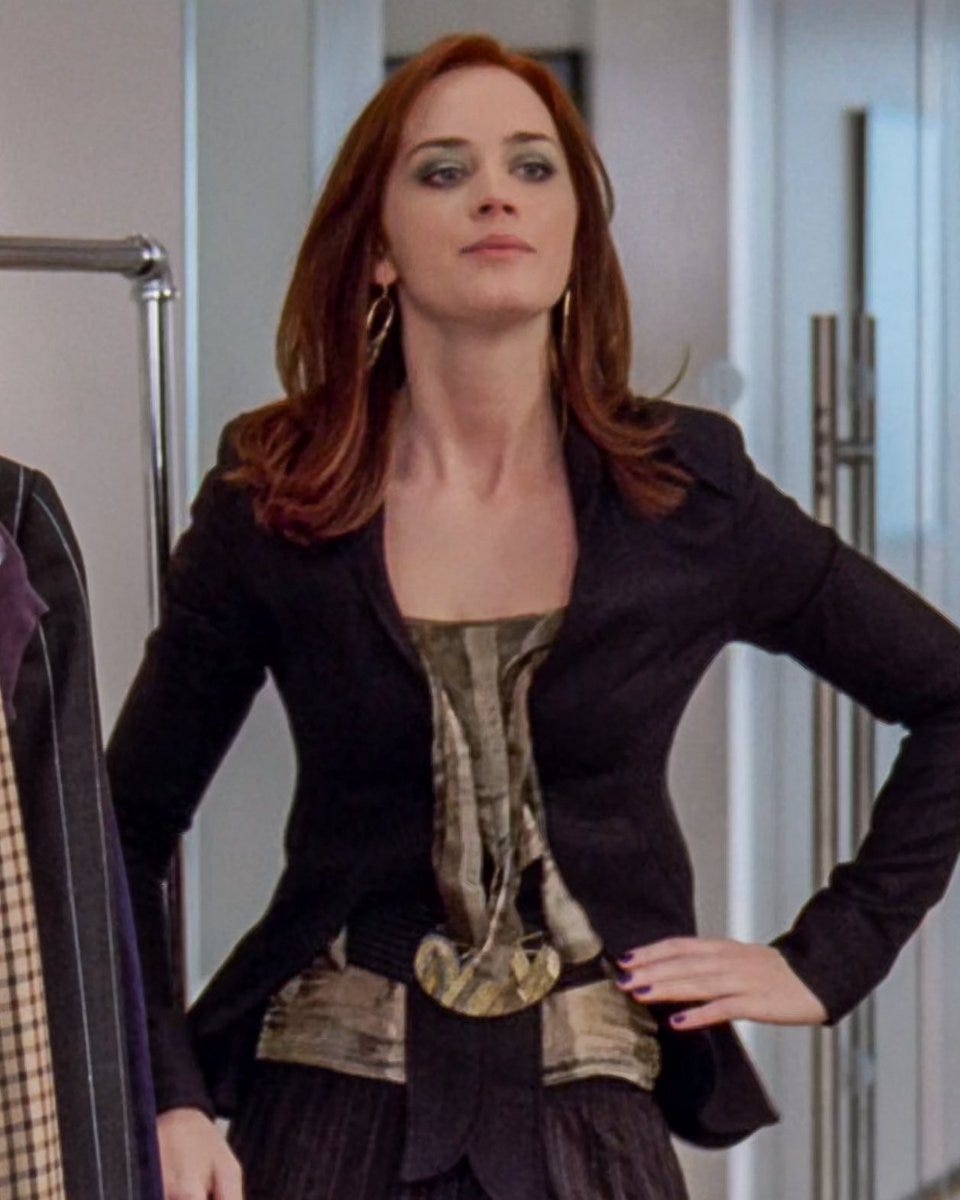
For all of the filmmakers’ disregard for the film’s script and styling, the Devil Wears Prada 2 still received ample attention for its advertising rollout. It felt inescapable. A Diet Coke can I bought at a pizza place in Chelsea a few months ago arrived embossed with a spiky red heel. Weeks later, I saw a Google ad based on the original film. In the clip, which played before my screening of I Love Boosters, Miranda asks Jin Chao, Andy’s enterprising young assistant, to source pieces for a photoshoot based on an image she has of some hideous red outfits. Chao immediately plugs the photo into Google reverse image search, identifies the garments, and orders them by courier, much to the astonishment of her coworkers who have never heard of reverse image search or phones. “That’s all,” texts Miranda on her Google phone.
This is inane, but so is all advertising. What was remarkable was how similar the experience of sitting through this Android ad was to the experience of sitting through The Devil Wears Prada 2 itself. The whole film is littered with sponsored content and rapid celebrity cameos. It feels like an advertisement, but for what? For dull clothing from Net-a-Porter? For the dying magazine industry? For recycled big budget IP?

On the heels of The Devil Wears Prada 2 comes I Love Boosters, Boots Riley’s exuberant and maximalist second film. I Love Boosters is a shoplifting comedy that follows a trio of women (Keke Palmer, Taylor Paige, and Naomi Ackie) in the Bay Area who steal clothing and resell it at a lower price. Riley riffs on the moral panic about shoplifting that has gripped the nation in recent years. In the Bay Area in particular, you could barely go one day without reading about it in local news headlines from outlets like Berkeleyside/Oaklandside, which now has a whole section dedicated to public safety, as well as in national newspapers like The Atlantic. The latter outlet published at least five full articles about San Francisco DA Chesa Boudin and the city’s public safety image problem between 2021 and 2022. When San Francisco’s longtime downtown mall, where I used to go as a child, shut down in 2026, its decline was widely blamed on shoplifting and vagrancy, despite much evidence that more remote corporate mismanagement was the cause.
In I Love Boosters, the spectre of the omnipresent and all-powerful shoplifter is ramped up to a fever pitch. The “Velvet Gang,” as our shoplifting crew is known, repeatedly hit a series of outlet malls run by star designer Christie Smith (Demi Moore), packing huge quantities of clothing into bags, as well as a memorable bodysuit blown up to gargantuan proportions. Later on in the film, when the women end up employed at one of the outlets instead in a twist of fate, and their manager calls them into the dressing room just after opening to reprimand them. When they step back out into the store, it has literally been emptied out. Every single item of clothing is gone.
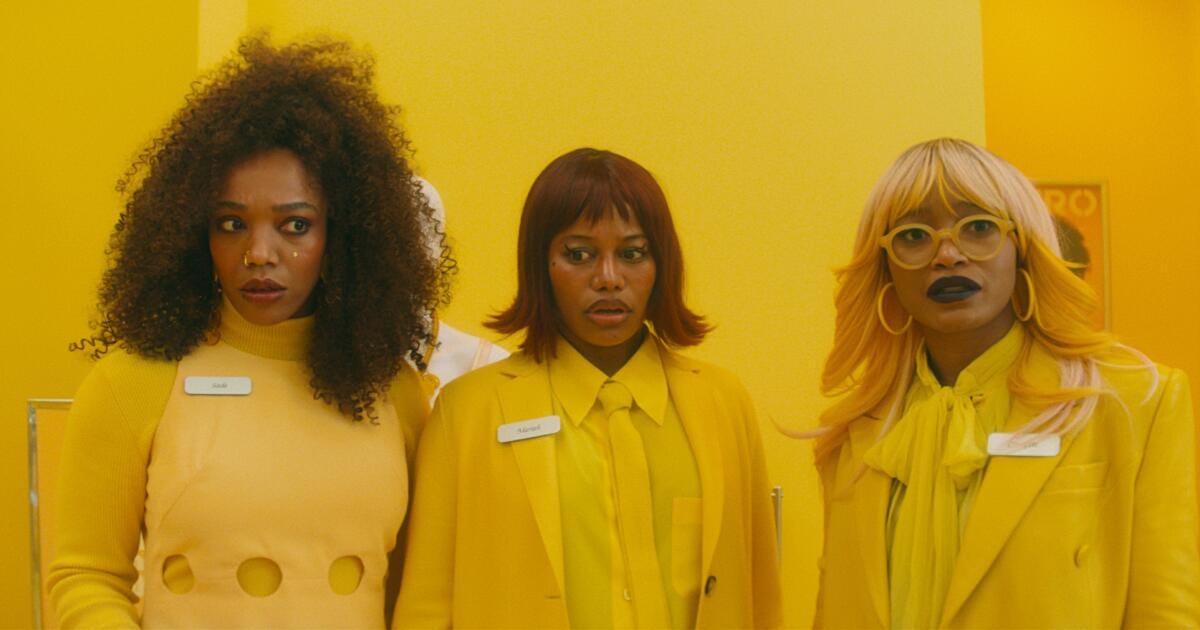
Corvette, played by Keke Palmer, is an aspiring fashion designer, and she wears a series of innovative sculptural pieces that become increasingly surrealist as the film goes on. Each of Christie Smith’s outlet stores are decorated in monochrome, entirely filled with canary yellow or lime green clothing. As Corvette and the Velvet Gang transition from boosters to retail workers and back again, their looks also shift and transform. Fashion comes from the streets, Riley argues, and luxury fashion houses, like parasites, draw their inspiration from below. When Christie Smith insists that she is offering a gift of art that will trickle down to the people, her assistant retorts that perhaps the people want to be the artists and not the art.
All good and well, but Riley is a communist and so the film does not end there. Instead, he goes on to introduce a magic teleportation device that has been developed by the CCP. The device is stolen by Chinese garment workers, who hope to use it to force Christie Smith to agree to their demands. One Chinese worker named Jianhu lands in Oakland, vacuuming up clothing into the teleportation device to empty the outlet stores. Along with Corvette and the Velvet Gang, she seeks to sabotage Christie Smith and topple her fashion empire.
The teleportation device turns out instead to be something much stranger: a machine that exposes the world’s contradictions, driving class struggle. When Corvette aims it at the crowd in a pivotal near-final scene, they are radicalized. The boosters, retail workers and garment workers are united in a shared struggle In the film, this leads to a sort of general strike. We can infer that in this optimistic future, clothing will be produced by workers who are paid better and treated with more dignity. But Riley stops short of imagining what this might look like. I wish he had gone further, pushing his vision to encompass this new reality. What happens after the revolution? What of fashion then?
When the Bolsheviks overthrew the Russian monarchy in 1917 and decisively won their protracted civil war in 1922, they were tasked with creating a new reality wholesale. The new Soviet person, they believed, should be as different from the old imperial Russian as possible. They would live in a world governed by different rules and different realities, but also one that was materially different, defined in part by new kinds of different art, architecture, cookbooks, and clothes.
Among those tasked with developing this material culture was Nadezhda Lamanova, the best-known Soviet couturière and one of the primary architects of its formal contours . Lamanova was a successful designer before the revolution, creating evening dresses for Russian aristocrats (including the Empress), but she did not grow up particularly wealthy herself. Her humble roots perhaps enabled her to adapt to the new Bolshevik world in ways that many others struggled to. In her book Soviet Salvage, the writer Catherine Walworth quotes a letter from Lamanova in which she describes her life’s work as “the making of clothes that are both practical and beautiful.” With the support of the Soviet vanguard, Lamanova developed a plan for a new “Workshop of Contemporary Dress” in 1919, examining the relationships between form and function, between artistry, and practicality, and, perhaps, most importantly, how these garments would be mass produced. Walworth lists the elements of her syllabus at length, which included:
1. The construction of costume:
(a) Its shaping, and the human figure as its object
(b) The conception of a figure as a volume and a silhouette
(c) The construction of costume based on geometric forms
(d) Material and its connection with the form and purpose
(e) Color
(f) Decoration
(g) The purpose of costume
In his book The Soviet Century, itself a sweeping examination of the material culture of the USSR, historian Karl Schlögel quotes Lamanova along similar lines to explain how Soviet fashion sought to set itself apart from more traditional European luxuries: “It is not enough merely to create a comfortable costume,” Lamanova writes, “we need to ensure a proper correlation between the artistic elements of costume and the new forms and aspirations of the emerging new life.”
In 1923, with the loosening of the rules on private enterprise in the Soviet Union, Lamanova opened Atelier Mod, a state-sponsored fashion house where she collaborated with other pioneering Soviet designers. A 1925 portfolio of patterns created by Lamanova and Vera Mukhina reveals a preference for polyvalent garments that move easily between social settings. This is often achieved through the use of buttons or hooks which allow women to add sleeves to dresses or remove them and to fold down the collar and the waist panels of a shapeless work dress to convert it into eveningwear. Men’s jackets and pants similarly feature incisions and foldable, detachable elements that cinch a loose work jacket or add a pattern to pants.
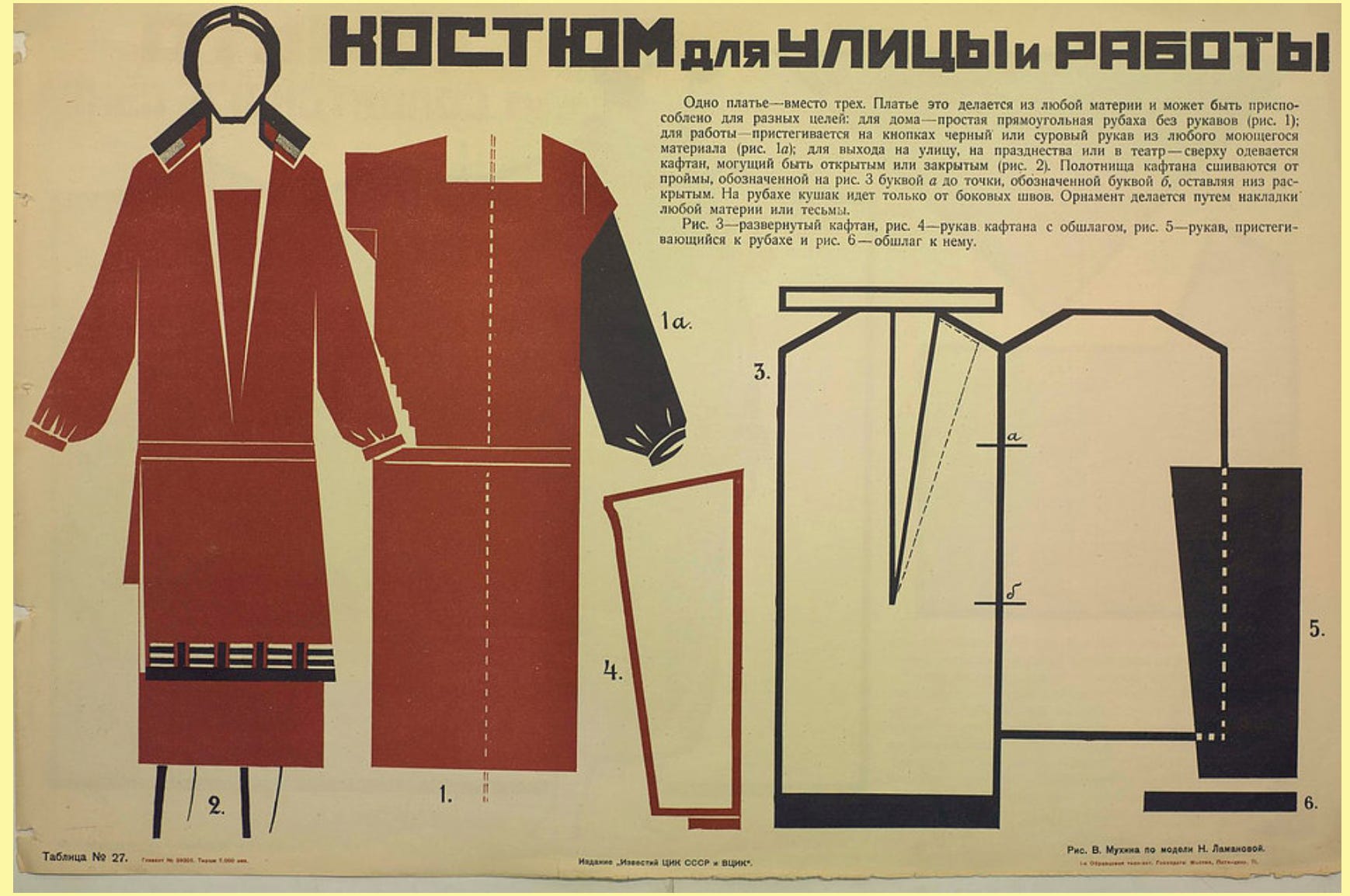
Pattern from Art in Everyday Life
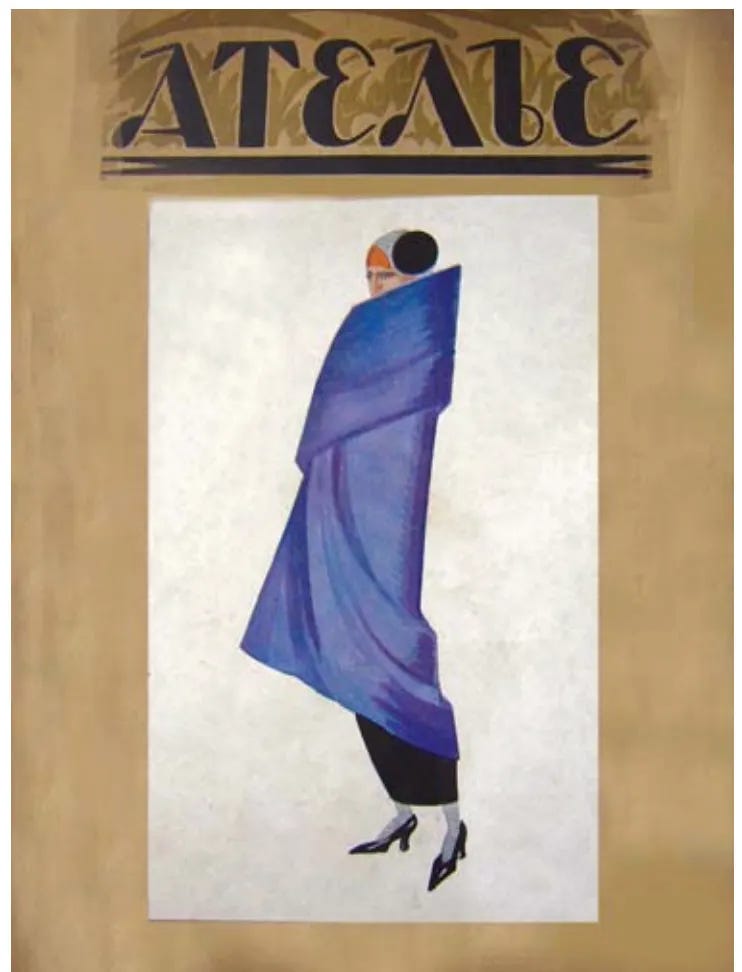
In 1923, the Soviet Union also debuted its first fashion magazine, Atelier, which featured a cover by designer Aleksandra Ekster for its inaugural issue. Ekster was a theater designer by training; in her book FashionEast: The Spectre That Haunted Socialism, the writer Djurdja Bartlett notes that Ekster’s “ideas on rational mass clothing did not exclude diversity and elements of ornamentation. In her functional designs, the same outfit could be used as a day dress, evening wear, and work clothing, simply by adding or taking off different layers (Ekster 1923b).” Like Lamanova, Ekster found an experimental approach to Constructivism. Her utilitarianism is beautiful above all else.
If Lamanova, Ekster, Vera Mukhina, and Vladimir von Mekk (author of the influential article “Dress and Revolution”) were straining towards a new futuristic horizon during the utopian ‘20s, their progress would be largely swept away in the 30s and 40s. With the austerity and increased stratification of Stalinism, functionality became both more crucial for the workers recruited to implement Stalin’s Five-Year Plan and less relevant to design as a whole. Stalin encouraged traditional feminine delicacy and glamour— at least for a select few. Stakhanovites ( model workers) were compensated relatively well, and a luxury market arose to meet their demand. Bartlett recounts a 1936 anecdote recorded in the magazine Heroes of Socialist Labor describing a Stakhanovite worker named Marusya who spends nearly her entire paycheck on a crêpe de chine dress, fancy shoes, and a nice coat. All of her labor, all of her striving, functioned in service of fashion.
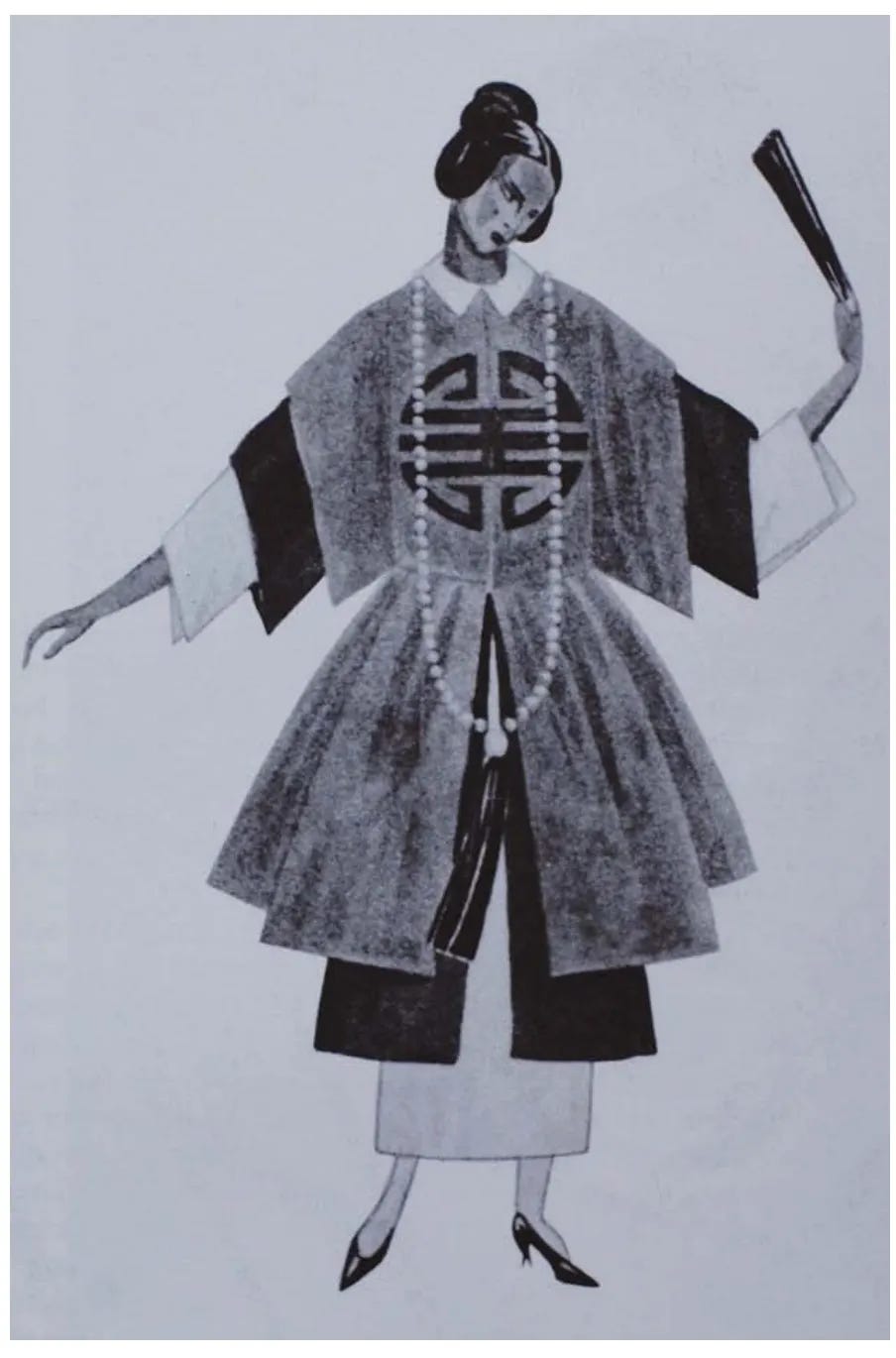
The House of Models, an officially state-sponsored fashion house, opened in Moscow in 1936, reinstating couture as a feature of Soviet life, but with a decidedly less ideological bent this time around. These designs, which lacked the functionality and expert tailoring of Lamanova’s visions, could not be scaled to mass production. Instead, like the couture of Western Europe, they remained scarce.
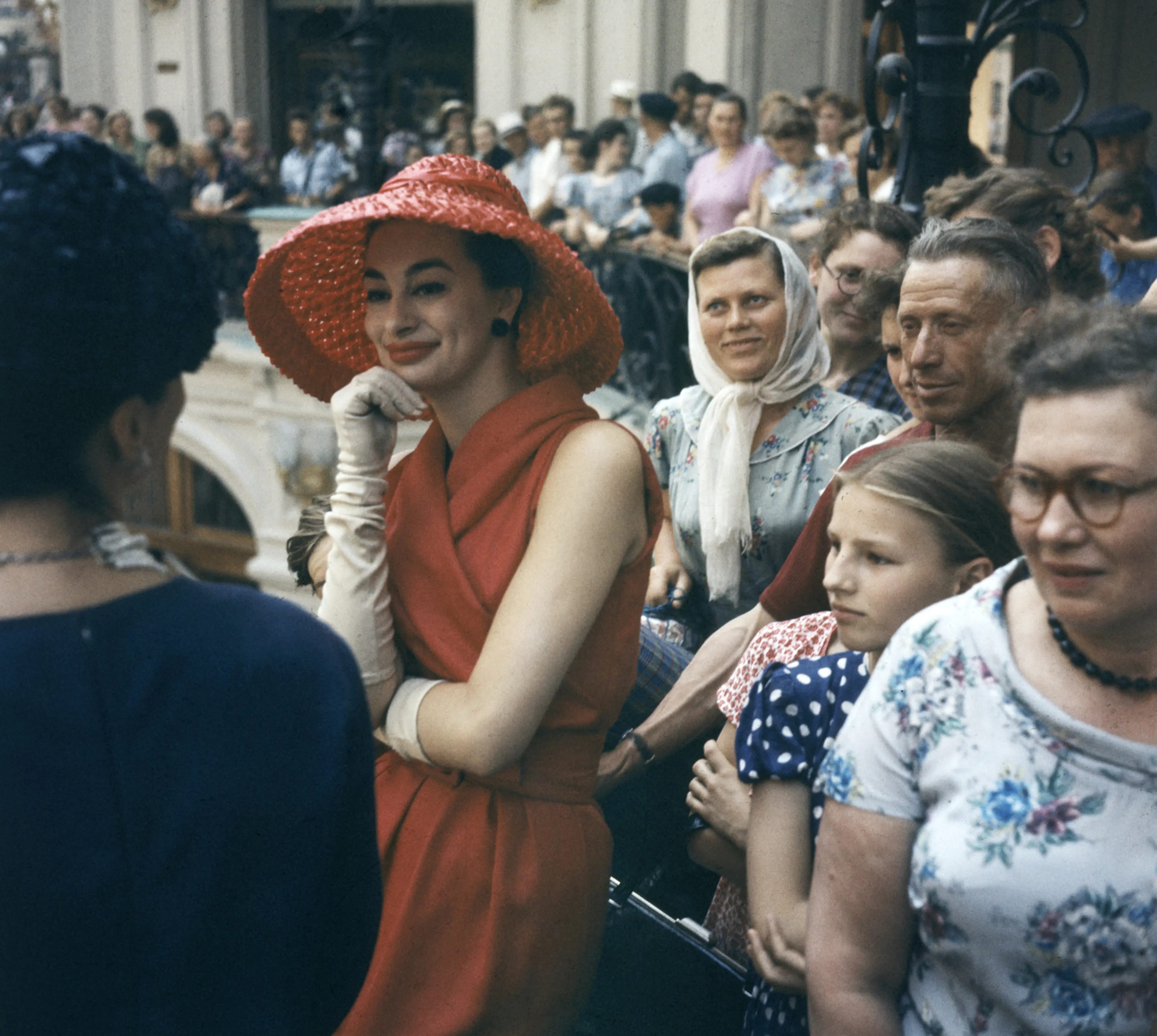
In 1959, Dior, headed up by Yves Saint Laurent, held a runway show in Moscow featuring twelve French models. Life sent photographer Howard Sochurek to photograph the show and the models wandering around the city, posing with locals and against industrial backdrops. The photos are framed in literal terms: luxury contrasted with poverty and beauty contrasted with ugliness. The show is widely described as the first fashion show by an international designer ever held in the Soviet Union, including by Life itself , but that was not entirely true.
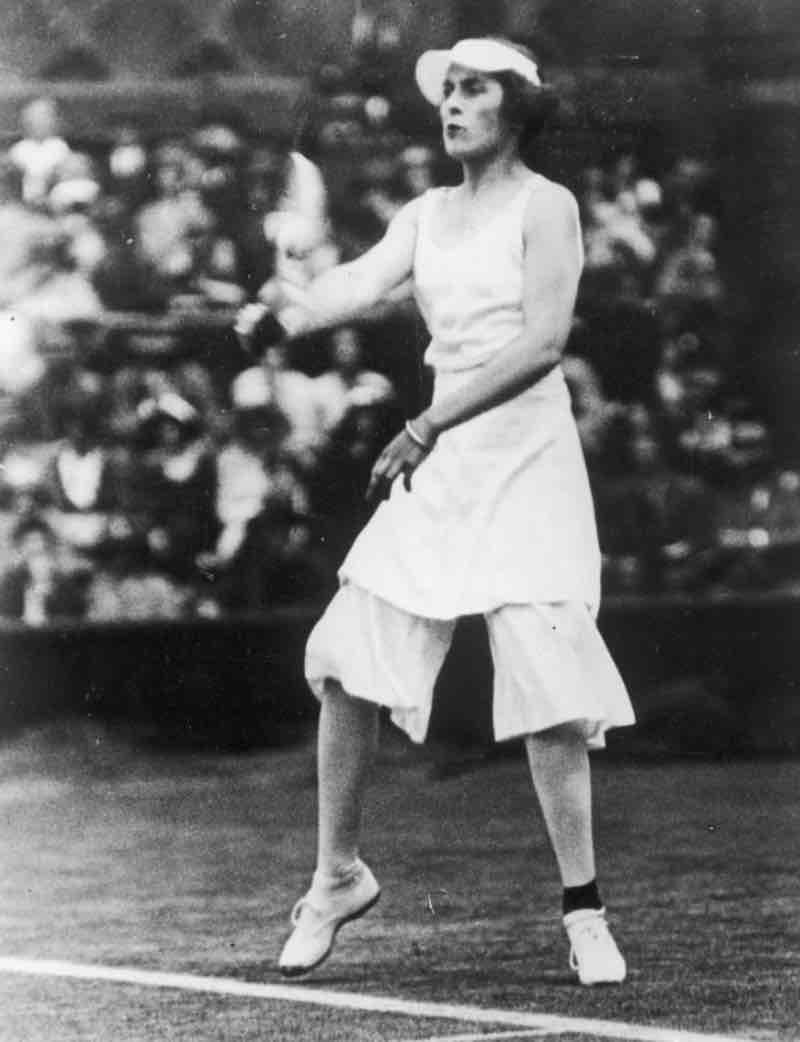
In December 1935, Elsa Schiaparelli, the formidable French designer, was invited to open a show at the House of Models. Schiaparelli was famous for creating functional clothing; she had started out designing sportswear for female athletes and her garments often had detachable parts or convenient In her memoir, she writes that she was surprised and disappointed by the sartorial situation when she got to Moscow. She had expected artful utilitarianism, an every woman’s dress, but instead she found pretty cocktail dresses on display for the wealthier and ugly poorly designed clothing worn by everyone else on the streets. This problem seemed easily solved. “I am convinced,” she wrote for The New York Times in 1936, “that the time is not far distant when the dress industry of Russia will take its place in the economic life of the country, perhaps on a scale comparable with the cloak and suit industry of the United States.”
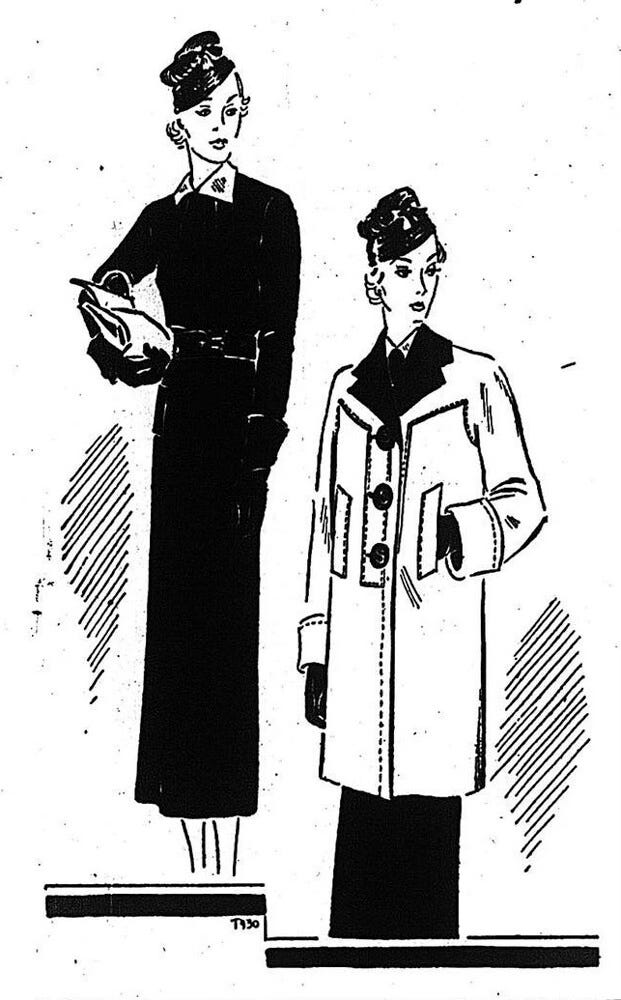
Her capsule was apparently interminably delayed in transit. “Moscow’s Fashion Show Missing on Railway Line,” reads a New York Times headline from November 1935. The capsule consisted of simple clothes, black dresses and a red felt coat. The garments were versatile and tasteful, designed to be appropriate for workwear and eveningwear alike, and also to be easily scalable to mass production, the ostensible goal of Soviet garment policy. The clothes were never produced, however. Schiaparelli, undeterred, returned to Paris and produced a set of “parachute” inspired dresses, made with sheer seamed panels, and designed to bubble out with movement. She was inspired by an experiment she had witnessed involving parachutes during her time in the Soviet Union.
In 2012, the Met Costume Institute ran a joint retrospective titled “Elsa Schiaparelli and Miuccia Prada: Impossible Conversations.” Judith Thurman noted in The New Yorker that it was a bold if fruitful pairing. Schiaparelli died in 1973, five years before Miuccia Prada took over the family business, and if Miuccia clearly took inspiration from Schiaparelli (which had then entirely ceased operations) in the ‘90s, it was only a piece of her lexicon. Miuccia was a member of the Italian Communist Party when she was young, but has mostly refrained from outward forms of political expression ever since. It’s hard to picture her, like Schiaparelli, visiting Moscow in the 1930s and designing clothes for the ideal proletarian woman.
Still, one of the things that makes Prada’s signature style so distinctive—and especially ‘90s Prada— is precisely its interest in the place where form meets function. In the brand’s earliest women’s collections, sheer silks drape over colored slips in layers almost reminiscent of Aleksandra Ekster’s billowing dresses and military jackets hang over delicate lace. These elegant, but understated dresses and cropped pants would be equally at home at work, at a party, in the streets. They form so closely to the bodies they cover that you can even imagine lounging in them at home. Couture that almost flies under the radar were it not for its exquisite construction and its attention to detail.
“Prada’s paradoxes have often been qualified as ‘postmodern,’” writes Judith Thurman, but in truth, these paradoxes are supremely modern. They interrogate the limits of mass production, the limits of clothing as artistry, and the purpose of clothing as an expression of self. Clothing tells a story, after all, about who you are, how you spend your days, and what you value and long for. Thurman attributes “a meteor shower of ideas” to Schiaparelli, including “wraparound dresses, culottes, overalls, the jumpsuit, mix-and-match separates, and those Futurist power suits whose linebacker shoulders and tapered cut minimized the padding on a female body.” Her innovations are often subsumed in mainstream histories to those of Coco Chanel and Christian Dior, both powerhouses who rose to the top of French couture.But neither Chanel nor Dior possessed the radical imagination of Schiaparelli. When Dior visited Moscow in the early ‘30s, he found it drab and uninspiring. He could not see potential in the day-to-day life of a Soviet woman, both worker and eager consumer of style, or in the flutter of a parachute, harbinger of gathering war.
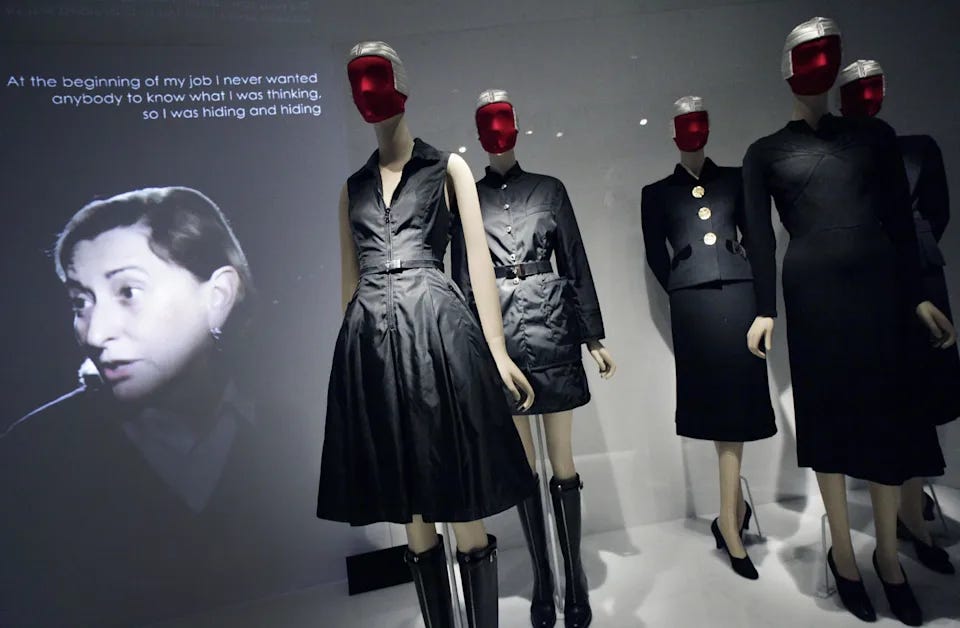
I have often joked that if a nationalized fashion industry were one day to arise, again tasked with solving the thorny issues of beauty and mass production, it would only be natural to put Miuccia Prada in charge of it. I have been discouraged by her endless “re-nylon” bags and “vintage look” camisoles and the ugly satin ribboned ballet flats of the “Miu-Miu girl.” But in a recent Miu Miu runway collection, Miuccia returns soberly to the problem of function. Writing in The Financial Times, Alexander Fury describes Miu Miu spring/summer 2026 transformed into “a factory’s mess hall at lunch hour, audience perched on Formica tabletops. The show was opened by Sandra Hüller, a resolutely serious actress who trained as a forklift truck driver for her role as a shelf-stacker in Thomas Stuber’s 2018 film In the Aisles. Here, she was dressed like one [.]”
The Miu Miu show featured design after design of layered uniforms. Aprons over cardigans, jackets, ribboned crop tops, and ruffled blouses in a display of functionalism reminiscent of Lamanova. It is easy to imagine the models stripping off the aprons and transforming their looks into partywear or loungewear or more elevated workwear. Later on in the collection, the aprons become more inventive, embroidered or encrusted with jewels. Babydoll dresses mimic their form. A leather apron is juxtaposed with a colorful necktie. The Miu Miu collection is a bit on the nose (uniform dressing, we get it!), but if you look at what is underneath the aprons, you start to see them less as statement pieces in themselves, and more as functional overgarments instead. They seek to designate function, to showcase its beauty and its value.
Of course, these are not real uniforms. Parts of these looks will be worn by celebrities on red carpets or by the very chic ladies of Manhattan. It is a shame that Miuccia, richer than God already, has not turned her inventive mind to larger problems. Imagine what she could do with mass production. Imagine the world outfitted in Prada.
Watched The Devil Wears Prada 2 and was entertained enough, but films and fashion are not what they were in 2006. Your research about Soviet fashion is really fascinating, and it's so interesting how it connects to Dior and Schiaparelli!
Wow, this is an incredibly thoughtful and well-researched piece. Not at all the journey I was expecting to go on at the beginning but I learned so much! I was especially interested in the discussion of early Soviet fashion houses. I’ve always found it curious that the Bauhaus designers never really tackled mass fashion in the same way they reimagined architecture, interior design, and object production—especially because they did have such a strong textile discipline. You’re a very engaging writer and I so enjoyed reading this. (Just a heads up, the first Schiaparelli paragraph seems to be missing a word after convenient)